Imagine being trapped on an island with nothing to do; no phones, no laptops, no wifi and the boring old commodities like food and water. But have no fear! Your island does, for some reason, come complete with a state of the art cinema with a lovely big screen and eight of your most beloved, favourite films of all time!
We have interviewed a number of people of note that are connected to the historical city of Bath. Seventh, is the writer and editor, Will Salmon.
Will Salmon
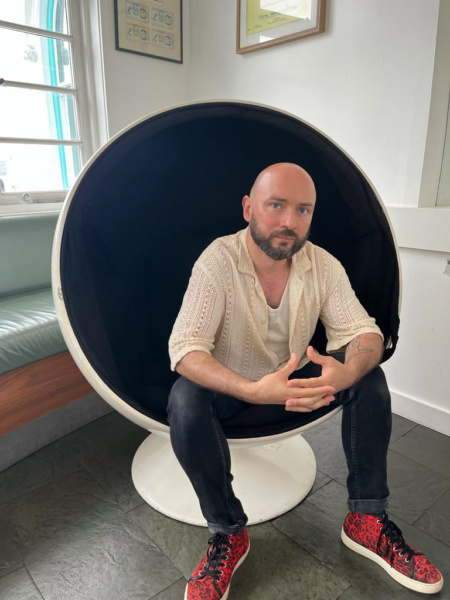
Will is a writer and editor, who mostly works within the film and music spheres. He launched the horror film magazine Horrorville, was the editor for Star Wars Insider and has wrote for Total Film, The Quietus, Electronic Sound among others. Currently, he is the editor of the long-running comic book website Newsarama and has written for SFX magazine for almost fifteen years.
Will is also the creator and owner of the independent electronic music label Modern Aviation.
“I’m from East Yorkshire originally but moved to Bath in 2008 when I started working in journalism. The city has a rich publishing history and I fell in love with the area very quickly for both its culture and its beauty. There are some great cinemas in Bath, too.”
Will’s love for film
Cinema is the most transportative medium. A good – or even, honestly, a bad – film can take you somewhere else, the combination of imagery, sound, even the film stock and colour grading creating a whole other world that you can live inside for a couple of hours. I love films that conjure and sustain a mood and an atmosphere or which have something to say about people and the sheer strangeness and wonder of life. Also films with great soundtracks, with which all my eight picks here, are blessed.
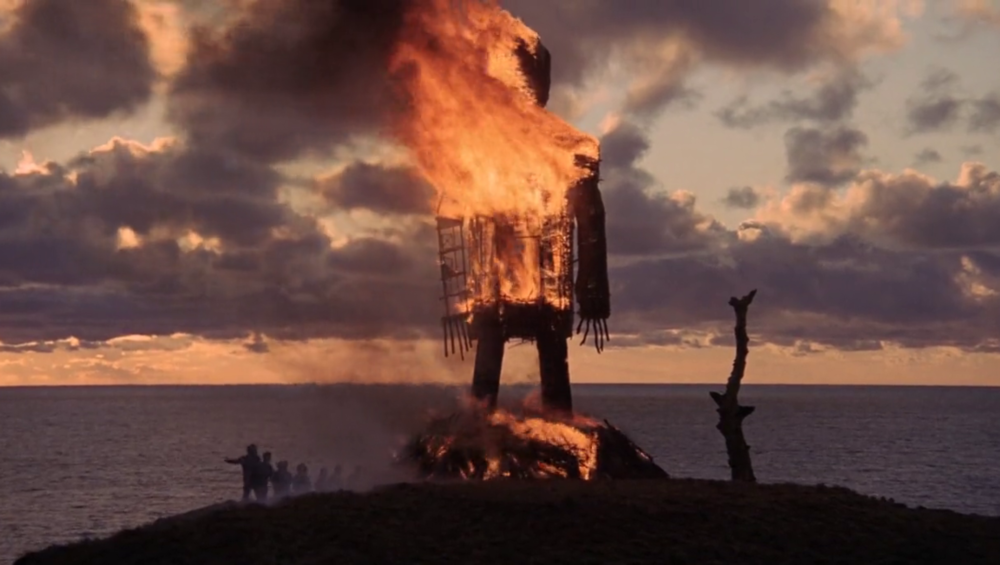
1. The Wicker Man, Robin Hardy, 1973
My favourite film of all time. An accidental masterpiece that came out perfect despite its tumultuous production, an untested director, and a sometimes ambivalent cast and crew. Somehow conjures a sense of the bucolic eerie unlike any other film, while also being sexy, genuinely funny, and kind of a musical if you squint a bit. Christopher Lee and Edward Woodward, in their best ever performances, duel over which of their respective religions is in the right and damn themselves in the process – plus a dancing Britt Ekland, a man dressed as a poodle, and David Bowie’s ex, the mime artist Lindsay Kemp. A hugely influential work in both film and music, where its soundtrack is rightly considered a milestone.
2. Twin Peaks: Fire Walk With Me, David Lynch, 1992
It’s fashionable to say that Mulholland Dr. is David Lynch’s best film. It’s not – this is. Widely derided at the time of its initial release, this prequel/sequel to the Greatest TV Show Of All Time, peels away the loveable kookiness of the original Twin Peaks to probe at what Lynch intended the show to be about all along: the complex, contradictory life of a young woman tormented and abused in a town that should have tried harder to help. We know it will end with Laura Palmer’s death but, wonderfully, Lynch turns that moment into her victory, too, and a reclaiming of her soul from the forces of both cosmic and human evil. Sheryl Lee gives a performance for the ages as Laura, and there’s a wonderfully smoky noir jazz score from Angelo Badalamenti.
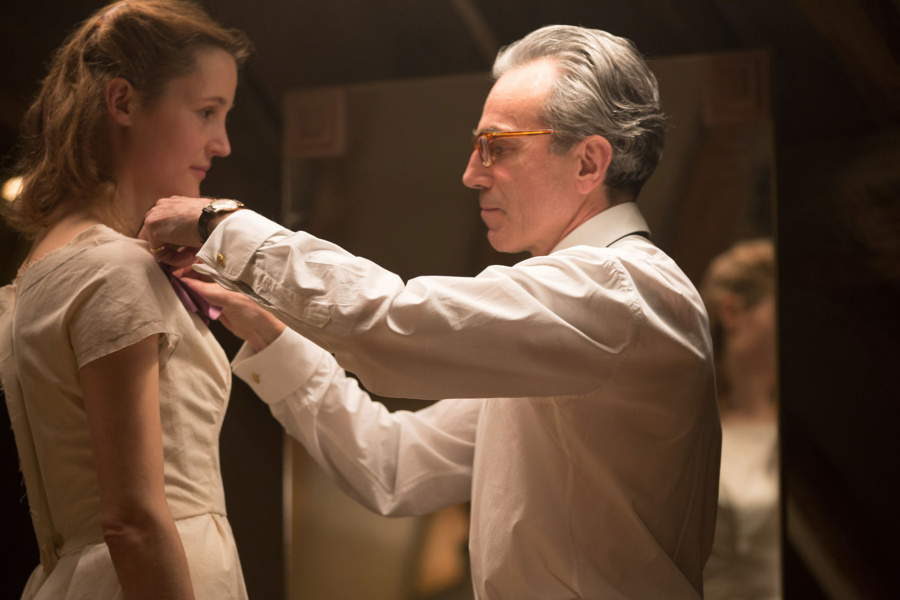
3. Phantom Thread, Paul Thomas Anderson, 2017
The first time I saw Phantom Thread I thought it was an ingenious and beautifully-mounted gothic costume drama that demonstrated Paul Thomas Anderson’s mastery of any genre he turns his attention to. The second time I saw it, I clocked just how funny it is. At its heart, Phantom Thread is a fussy comedy where the central character, Daniel Day-Lewis’s unbearable, stuffy, Reynolds Woodcock is equal parts Frasier Crane and Dracula. It’s a smart study in shifting power dynamics as Vicky Krieps’ Alma finds herself in a relationship that seems like utter torture until a dark, weird, cathartic and kinky final act puts an alternative and oddly optimistic spin on the whole thing. Plus it works as an unlikely Christmas film.
4. Bait, Mark Jenkin, 2019
Another relatively new film, Bait absolutely knocked me out the first time I saw it. There’s something viscerally shocking about the way the pockmarked and juddery monochrome 16mm film, shot on an old Bolex silent movie camera, interacts with the post-synced dialogue and sound effects to dislocating effect. The story itself is very straightforward – it’s about tourism and the housing crisis in contemporary Cornwall – but the way it is told is haunting and ethereal. It feels ghostly (and, indeed, as with Phantom Thread there is a ghost of sorts in the film) and yet also somehow tangible. Director Mark Jenkins’ follow-up, the surrealist horror film Enys Men, is equally impactful.
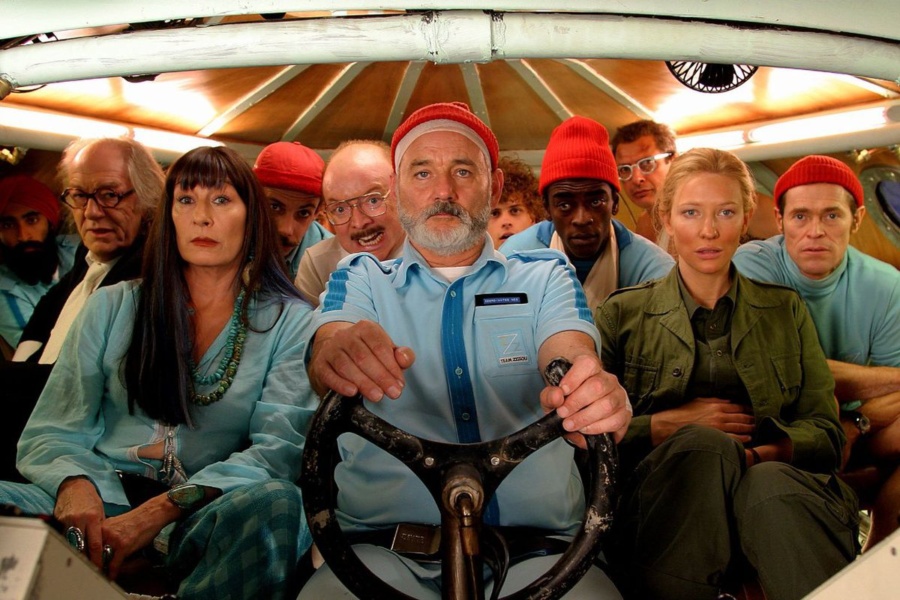
5. The Life Aquatic With Steve Zissou, Wes Anderson, 2004
Wes Anderson is a bit of a Marmite director and The Life Aquatic is often thought of as one of his lesser works, but it’s my favourite by far. It pushes the director’s aesthetic of self-conscious artifice to the absolute limit, while also offering up a genuinely affecting character study. Bill Murray is hilarious and tragic as Steve Zissou, a faded celebrity oceanographer who can’t mask the deep wells of pain within him (pain from the death of his best friend, killed by the possibly mythical “Jaguar Shark”, and pain from the string of failed relationships left in his wake). The arrival of his previously ignored son Ned (Owen Wilson) offers a shot at redemption, but even that is steeped in melancholy. The climax – a cathartic underwater encounter with some stop-motion puppets – never fails to make me cry. This is an adventure.
6. Farenheit 451, Francois Truffaut, 1966
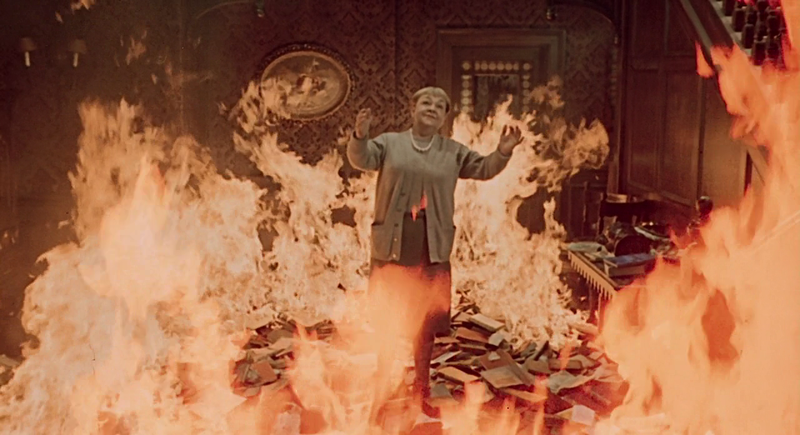
An undeniably flawed film, but there’s something wonderfully romantic and strange about François Truffaut’s adaptation of Ray Bradbury’s dystopian novel. Montag (Oskar Werner) is a Fireman, tasked with burning books in a nondescript city of the future and trapped in a drug-numbed marriage to Linda (Julie Christie). Enter Clarisse (also played by Christie), a mysterious young woman whose curiosity leads Montag to start reading the books he is meant to destroy. Where the book is bleak and chilly, there’s a warmth (no pun intended) to Truffaut’s version of the tale, leading to a fairytale ending that could be seen as deeply corny if it wasn’t so lovely.
7. The Blair Witch Project, Daniel Myrick, Eduardo Sanchez, 1999
It’s not the scariest film ever made (that’s Hideo Nakata’s Ringu, obviously) but no other film has ever quite captured that sense of being lost in the woods, or nailed the power of folklore quite as accurately. Three young filmmakers set out to make a documentary about the mythical Blair Witch in the woods around Burkittsville, Maryland, and find a lot more than they bargained for. To skeptics, it’s just a lot of shaky camera work, snapping twigs and banging rocks. But if you grew up in and around the countryside there’s something elemental here. Famously, the actors really did camp alone in the woods while the crew messed with them in the middle of the night. The sheer sense of knackered desperation is so palpable that I’m still not quite 100% convinced that this didn’t all happen for real.
8. The Duke of Burgundy, Peter Strickland, 2014
All of Peter Strickland’s films exist in a world that’s somewhat like, but clearly not quite, our own. The Duke of Burgundy is a dreamy romantic drama – one that’s inspired by ‘70s erotica, but which never actually slides into the explicit – that takes place in a sapphic idyll where the entirely female cast seem to spend their days either attending lectures on lepidoptery or leisurely cycling around the ambiguously European countryside. Cynthia (Sidse Babett Knudsen) and Evelyn (Chiara D’Anna) are in love, but their relationship is curdling. Things grow increasingly tense between the two but, as with Phantom Thread, The Duke of Burgundy ends up somewhere heartwarming, hopeful and re-affirming of both love and cinema.
Thanks to Will for his Desert Island Films! Look out for the next in our series, coming out in September!